

5 Easy Speaking Activities That Actually Get Students Talking

If your ESL students freeze during speaking time, try moving away from broad “class discussions” and toward guided speaking games with clear prompts, partner roles, and short speaking turns. These low-prep ESL speaking activities are designed for mixed-level classes, so students have enough support to speak with confidence while still getting meaningful conversation practice.
These activities are ideal for shy English learners, students who worry about making mistakes, or groups that go quiet the second you say, “Discuss with a partner.” Each routine is easy to repeat, simple to explain, and built to increase student talk time without adding more prep to your day.
Why Speaking Practice Matters in the ESL Classroom
Speaking is where students begin putting everything together: vocabulary, grammar, listening, pronunciation, and confidence. But for many English learners, speaking can also feel intimidating. That is why students need ESL speaking practice that feels safe, predictable, and achievable.
- Fluency: Students need frequent short chances to use language aloud.
- Confidence: Familiar routines help quiet students take more risks.
- Conversation skills: Learners practice asking questions, giving opinions, and responding naturally.
- Lower anxiety: Sentence frames, timers, and partner roles make speaking less scary.
- More participation: Games give students a clear reason to talk.
The right ESL oral communication activities turn silence into structured, purposeful interaction.
What Makes an ESL Speaking Activity Actually Work?
A speaking activity only works if students know what to say, how long to speak, and what their role is. The best communicative ESL activities are simple, repeatable, and easy to adjust for different levels.
Look for activities that are:
- Low prep: Print, project, or pull a card and begin.
- Easy to repeat: Students learn the routine once and improve over time.
- Structured: Prompts, sentence starters, and roles prevent confusion.
- Flexible: Beginners can give short answers while advanced students expand.
- Interactive: Students speak in pairs or small groups where the pressure is lower.
- Engaging: Games make speaking feel purposeful instead of forced.
10 Low-Prep ESL Speaking Activities You Can Use All Year
1. Odd-One-Out Discussion Cards
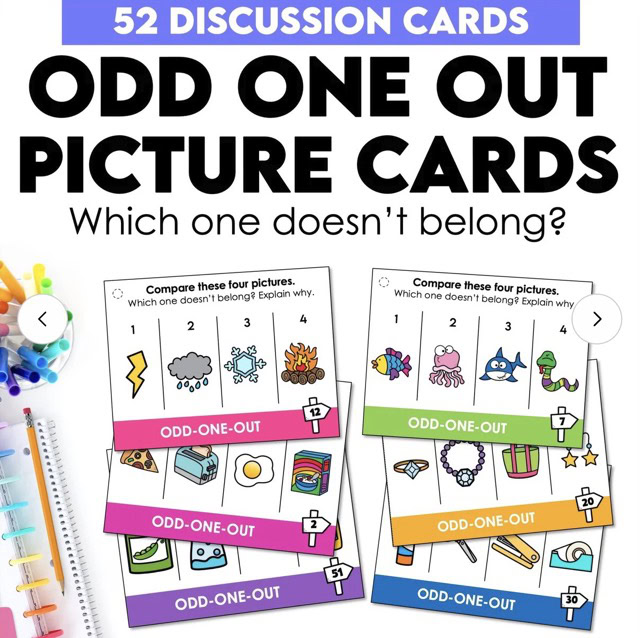
Odd-one-out cards are perfect for mixed-level classes because students can choose different answers as long as they explain their thinking. This makes the activity feel less stressful and more open-ended.
How it works: Students look at a set of pictures and decide which item does not belong. Then they explain their choice using a frame like: “I think ___ does not belong because ___.”
- Best for: warm-ups, speaking centers, early finishers
- Skills: describing, reasoning, vocabulary, sentence expansion
- Teacher tip: Ask students to add one follow-up question after each answer.
2. Topic-Based Conversation Question Cards
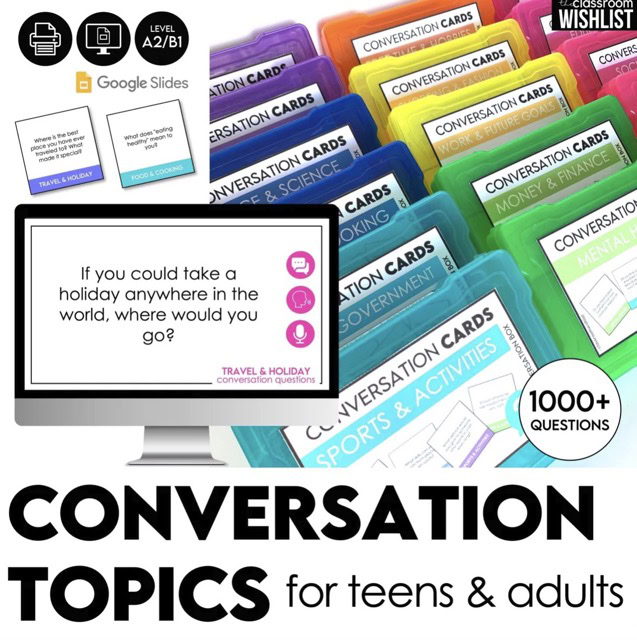
Older students often need conversation prompts that feel relevant and age-appropriate. Topic-based ESL conversation cards work well because students can talk about real-world themes like school, technology, travel, jobs, money, and relationships.
How it works: Give each pair one card. Students discuss for 60–90 seconds, then switch cards or partners. To support conversation, post three moves on the board: agree, disagree politely, ask a follow-up question.
- Best for: daily speaking routines, debate prep, fluency practice
- Skills: opinions, follow-up questions, discussion language
- Easy extension: Students write a two-sentence summary of their partner’s answer.
3. Roll-a-Topic Speaking Dice Game
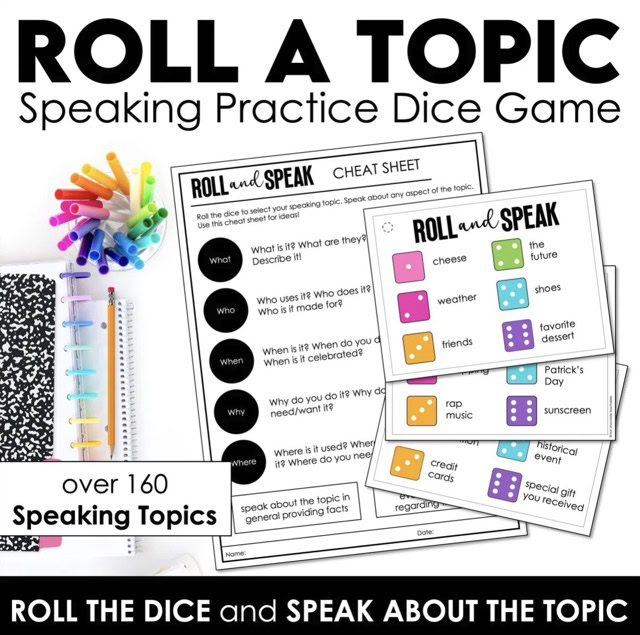
When students don’t know what to say, a dice game removes some of the pressure. The roll chooses the topic, so students can focus on speaking instead of deciding what to talk about.
How it works: Students roll, land on a topic, and speak for a set time. Beginners can use sentence frames, while stronger students add examples or ask a second question.
- Best for: centers, warm-ups, sub plans
- Skills: turn-taking, vocabulary recall, short speaking responses
- Teacher tip: Give students a small goal, such as “use two adjectives” or “ask one follow-up.”
4. Speak for 30 Seconds
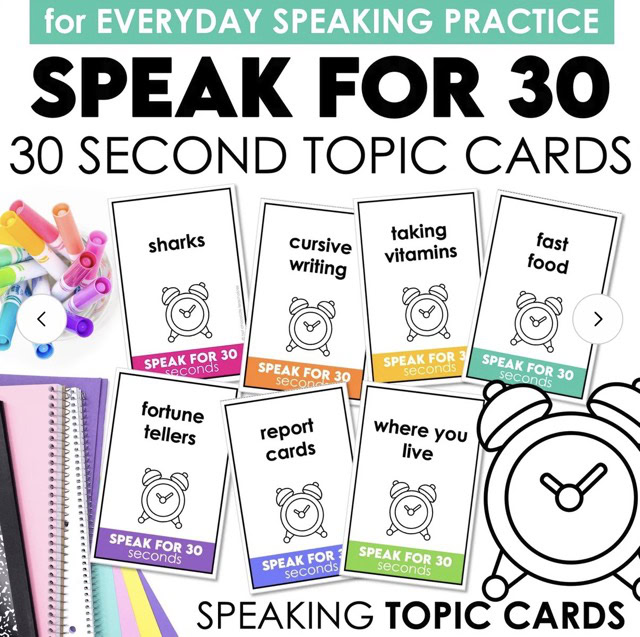
This is one of the simplest ways to build fluency. A short time limit makes the task feel manageable, even for students who usually avoid speaking.
How it works: Students choose a card and speak for 30 seconds. Their partner listens and asks one follow-up question. Then they switch roles.
- Best for: bell ringers, fluency practice, speaking warm-ups
- Skills: fluency, confidence, vocabulary access
- Differentiation: Beginners use sentence starters; advanced students include an example or reason.
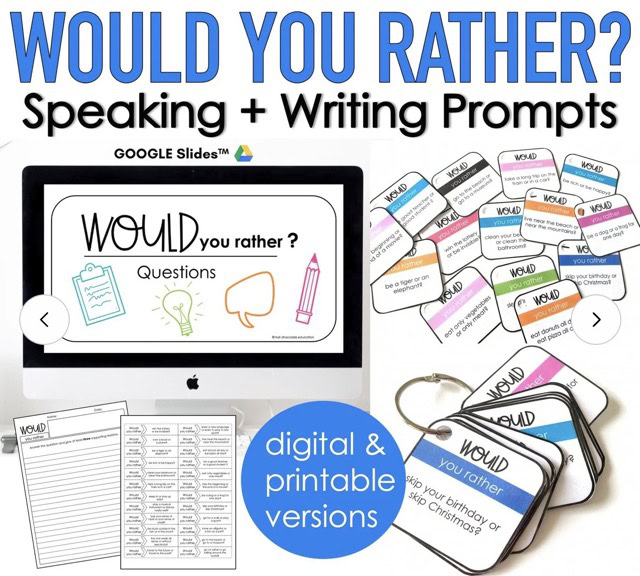
5. Would You Rather?
Would You Rather questions are great for reluctant speakers because students usually have an instant opinion. The format feels fun, but it still builds important language skills.
How it works: Students choose option A or B and explain why. For an extra challenge, have them try to convince a partner to change their answer.
- Best for: brain breaks, Friday speaking, community building
- Skills: opinions, reasons, persuasion, because-clauses
- Teacher tip: Require every answer to include one “because” sentence.
6. Two-Minute Speed Chats
If your class goes quiet during discussion, make the task shorter. Two-minute speed chats keep the energy moving and give students several chances to practice the same language with different partners.
- How to run it: Set a timer for 2 minutes, let students talk, rotate partners, and repeat.
- Support: Post three sentence starters on the board.
- Mixed-level tip: Pair stronger speakers with quieter students for the first round, then rotate.
7. Ask Me Anything Partner Interviews
Interviews feel safer than open-ended discussions because students have a clear job: ask, listen, and report. This is an easy ESL pair work activity that works with almost any topic.
- Setup: Give each pair question stems with what, when, where, why, and how.
- Speaking goal: Each student asks at least three follow-up questions.
- Accountability: Students share one interesting answer with the class.
8. Picture Talk
Pictures are powerful because students can talk about what they see instead of trying to invent ideas from nothing. This makes speaking easier for beginners and low-confidence learners.
- Routine: Describe three details, guess what is happening, then add one opinion.
- Sentence frames: “I see…” “I think…” “Maybe…”
- Extension: Students write three sentences after speaking.
9. Opinion Corners
Opinion corners add movement while keeping the task structured. Students choose a side, move to a corner, and explain their opinion to someone nearby.
- Setup: Label corners Agree, Disagree, Not Sure, and It Depends.
- Prompt: Read a statement, students move, then discuss with someone in their corner.
- Challenge: Ask students to use “I understand, but…” in their response.
10. Chat-Then-Write
If you want speaking to support writing, let students talk before they write. Speaking first helps them organize ideas and borrow useful vocabulary from classmates.
- Routine: 3 minutes speaking, 5 minutes writing, 1 sentence share-out.
- Low prep: Use one prompt on the board.
- Assessment: Collect the final sentence as an exit ticket.
A Simple Weekly Speaking Routine
Consistency is what makes speaking practice work. A predictable weekly routine helps students feel comfortable because they know what to expect.
- Monday: Would You Rather + one reason
- Tuesday: Speak for 30 Seconds with a partner
- Wednesday: Odd-One-Out discussion cards
- Thursday: Roll-a-Topic speaking centers
- Friday: Conversation cards + partner summary exit ticket
After a few weeks, students become more comfortable with the routines, and their speaking usually becomes longer, clearer, and more confident.
Teacher FAQs
How do I get reluctant ESL students to speak?
Use structured speaking games with sentence frames, timers, and clear roles. Activities like Would You Rather and Speak for 30 Seconds reduce pressure and give students a clear starting point.
What should I do when students go silent?
Silence often means students need more support. Give them a prompt card, a sentence starter, and a short time limit. Pair work also feels safer than whole-class speaking.
How can I differentiate speaking activities?
Keep the activity the same but change the expectation. Beginners give short answers with sentence frames, while stronger students add reasons, examples, or follow-up questions.
What are the best low-prep ESL speaking activities?
Conversation cards, dice games, Would You Rather prompts, picture talk, interviews, and short fluency sprints are all easy to reuse with many topics and levels.
Shop the Speaking Activities Featured in This Post
- Odd-One-Out Speaking Task Cards
- ESL Conversation Card Mega Bundle
- Roll-a-Topic ESL Speaking Dice Game
- Speak for 30 Seconds Prompt Cards
- Would You Rather Questions


