

3 Fun Ways To Practice S-Blends In First Grade

If you’re looking for an easy way to teach S-blends in first grade, a short game-based routine can be much more effective than using worksheets alone. Activities like S-blends bingo, S-blends clip cards, and an S-blends card game give students repeated exposure while keeping phonics practice hands-on, visual, and engaging.
These picture-and-word phonics activities are especially useful when students know individual letter sounds but still pause or guess when they see beginning blends like sc, sk, sl, sm, sn, sp, st, and sw. In this post, you’ll see how to build a simple, repeatable S-blends routine that supports decoding, fluency, and confidence without adding extra planning stress.
If you want ready-made resources, you can use the S-Blends Card Game on Hot Chocolate Teachables or S-Blends Card Game on Teachers Pay Teachers, the S-Blends Bingo Game, and the S-Blends Task Cards.
What Are S-Blends?
S-blends are consonant blends that begin with the letter s. Common beginning S-blends include sc, sk, sl, sm, sn, sp, st, and sw. These blends appear in many early reading words, so students need frequent practice recognizing and reading them smoothly.
Unlike digraphs, where two letters make one new sound, blends keep both sounds. Students need to hear each sound and slide them together without adding an extra vowel.
- st in star
- sp in spoon
- sl in slide
- sw in swing
- sk in skate
- sm in smile
- sn in snail
- sc in scarf
For many first graders, the hard part is not identifying the sounds separately. The real challenge is blending them quickly when reading full words.
Why S-Blends Can Be Difficult for First Graders
You may notice that a student can say the sounds for s and t separately, but then struggles with a word like star. That is completely normal during early phonics instruction.
Common S-blends mistakes include:
- adding an extra vowel sound, such as suh-tar instead of star
- leaving out one sound in the blend
- mixing up similar blends like sp and st
- looking only at the picture instead of reading the word
- reading the word in isolation but struggling in connected text
Students usually make better progress when practice is short, repeated, and interactive. A routine that combines games, oral reading, and quick review helps students transfer the skill into real reading.
Why Use Games for S-Blends Practice?
Worksheets can be useful, but they often do not give students enough meaningful repetition. Game-based phonics practice helps students stay focused while reading the same blend patterns many times.
Games help students:
- see and hear blend patterns repeatedly
- stay engaged for longer periods
- practice reading, speaking, and listening together
- build automaticity in a low-pressure way
- work with partners, small groups, or independently
A strong S-blends routine can include:
- Bingo for recognition and listening practice
- Clip cards for focused accuracy and sound discrimination
- Card games for fluency, repeated reading, and confidence
A Simple No-Prep S-Blends Routine
When I say “no-prep,” I mean you can print once, organize the cards, and reuse the activities again and again. That is especially helpful in first grade, where phonics practice needs to be consistent but manageable.
Weekly Routine
- Day 1: Introduce or review the target S-blends.
- Day 2: Use clip cards for careful sound matching.
- Day 3: Play bingo for whole-group or small-group review.
- Day 4: Use the card game for fluency practice.
- Day 5: Mix activities for review and a quick check-in.
You can also rotate all three resources during literacy centers. Students get the benefit of a predictable routine while still practicing in different ways.
S-Blends Card Game: Build Fluency Through Repeated Reading
An S-blends card game is a simple way to make phonics feel like play. Because students read the same blend patterns across multiple cards, they get repeated practice without it feeling repetitive.
You can find it here: S-Blends Card Game on Hot Chocolate Teachables or S-Blends Card Game on TPT.
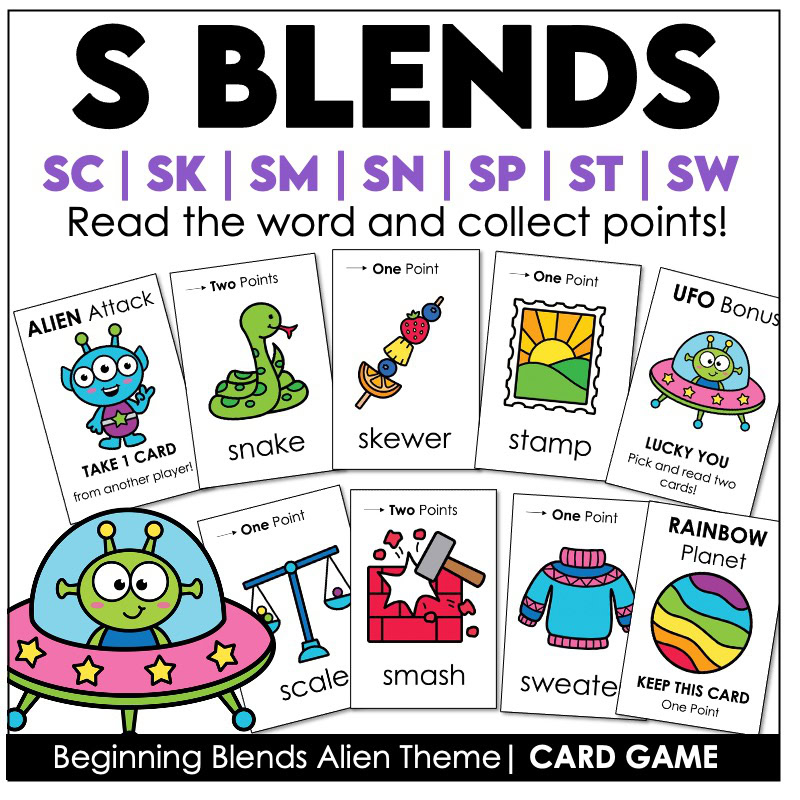
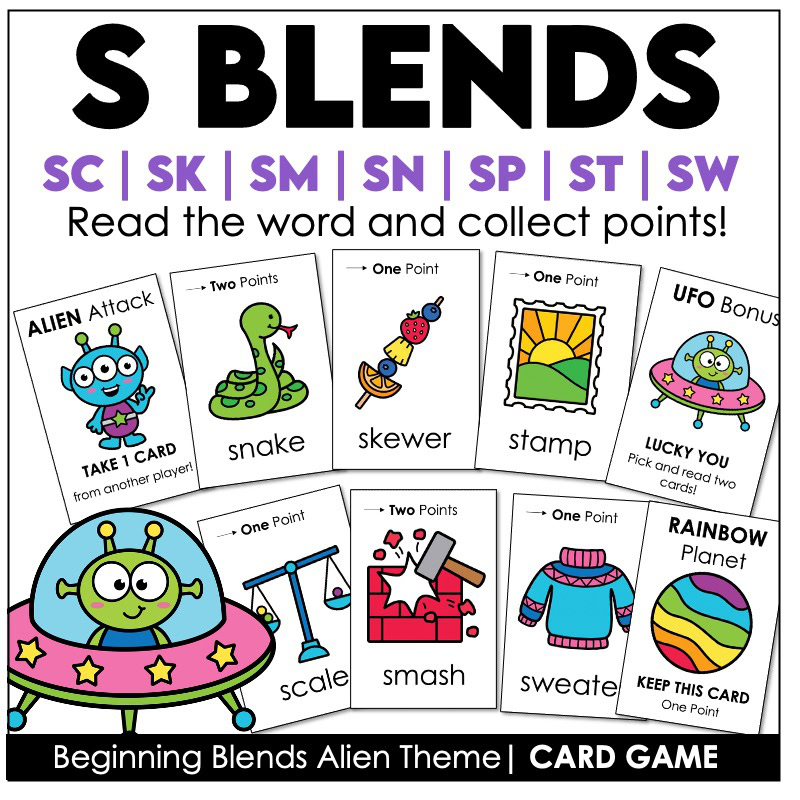
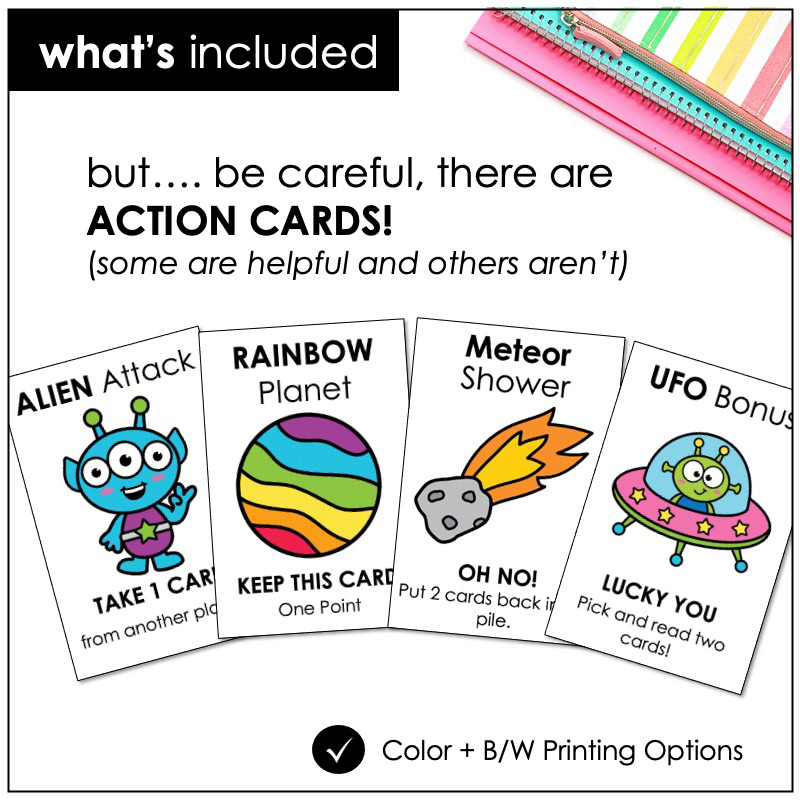
Card games are helpful because students read the same words more than once. In a worksheet, a child may read a word one time and move on. In a card game, students often see, say, and hear the word several times in one round.
This resource works well for:
- phonics centers
- small-group intervention
- partner practice
- early finishers
- quick review activities
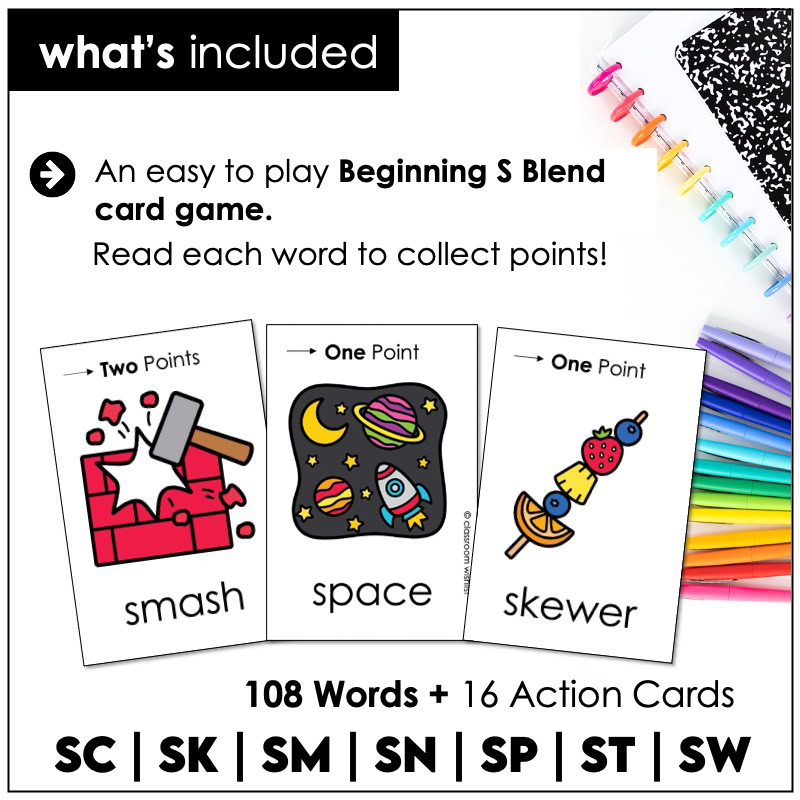
How to use it: Place students in pairs or groups of three. Before playing a card, students read the word aloud. If they get stuck, a partner helps them blend the sounds.
Sample student response: “This word is snail. It begins with sn.”
Success looks like: Students can name the blend and read the full word smoothly without adding an extra vowel sound.
S-Blends Bingo: Whole-Class Review Without Worksheet Fatigue
S-blends bingo is a great way to review several blends at once. Students love the game format, and you get a quick look at who is recognizing the words automatically and who still needs support.
You can grab it here: S-Blends Bingo Game on Hot Chocolate Teachables or S-Blends Bingo Game on Teachers Pay Teachers.
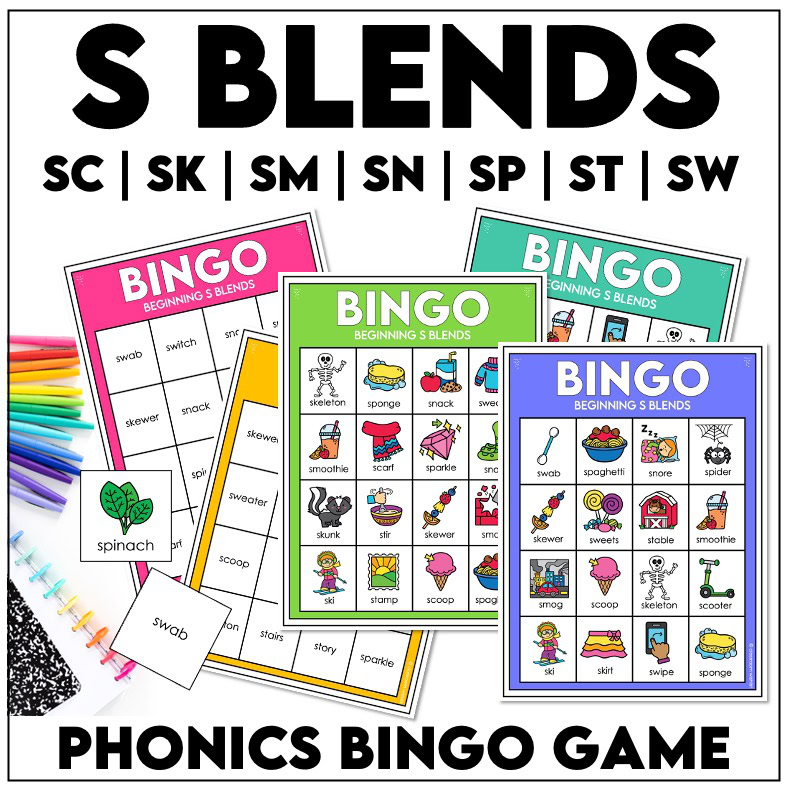
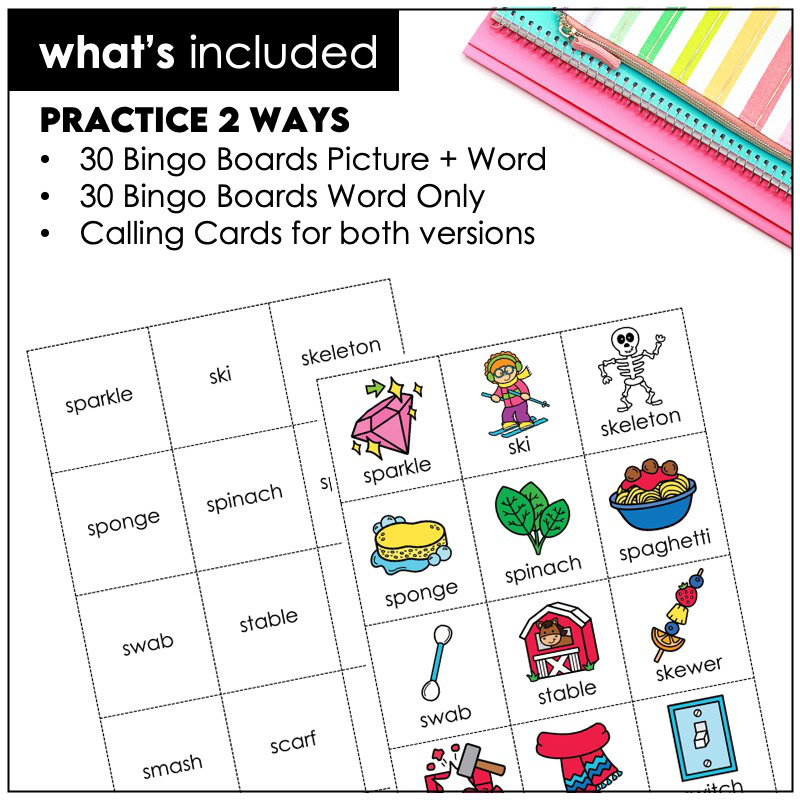
Bingo works well because you can choose the level of support your students need. Picture-and-word boards help students who are still developing confidence, while word-only boards provide a stronger decoding challenge.
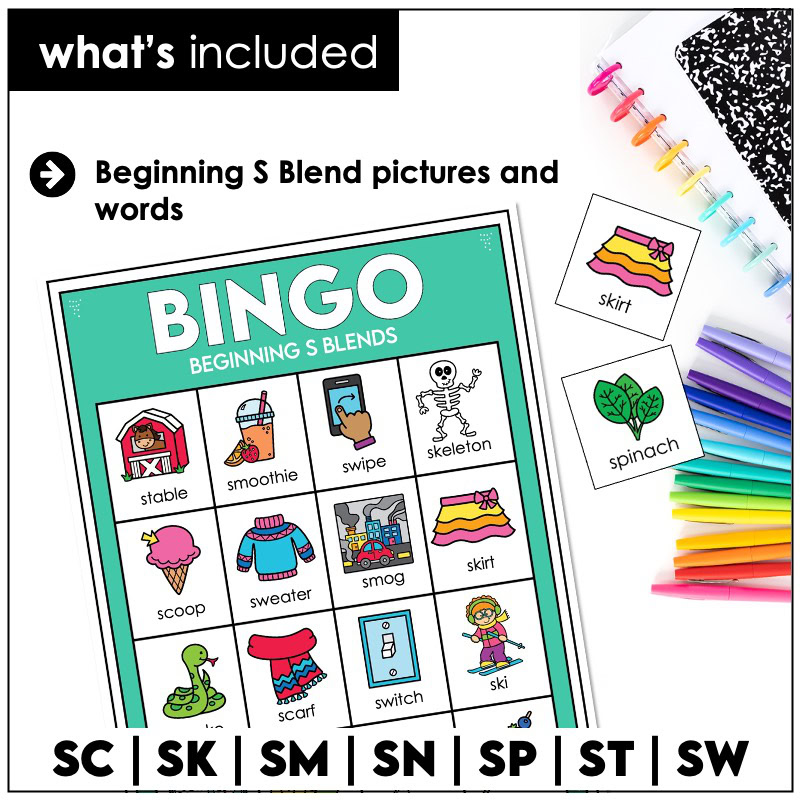
How to use it:
- Review the target blends before playing.
- Call or show one word.
- Students find the matching word on their board.
- Before covering the space, they whisper-read the word.
- When a student gets bingo, they read the winning row aloud.
That final step turns bingo into a true reading check instead of just a matching game.
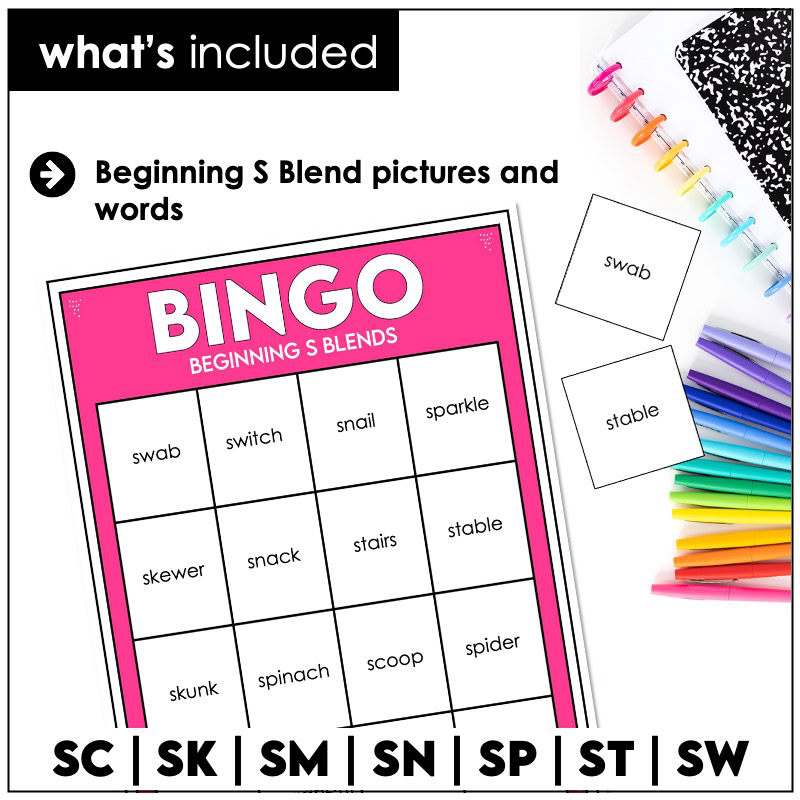
Teacher tip: Some students will use the picture and skip the word. Ask students to whisper-read before covering each square to keep the focus on decoding.
S-Blends Clip Cards: Focused Practice for Accuracy
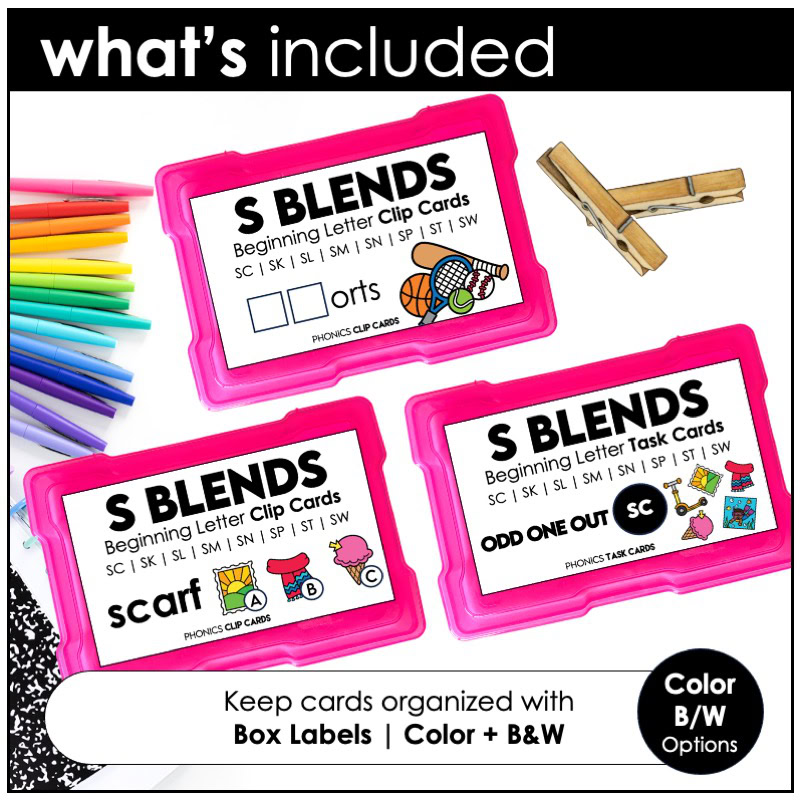
If you need an activity students can use more independently, S-blends clip cards are a strong option. They are easy to prep, simple to store, and perfect for literacy centers, fast finishers, or intervention.
You can find them here: S-Blends Task Cards on Hot Chocolate Teachables or S-Blends Beginning Sounds Task Cards on Teachers Pay Teachers.
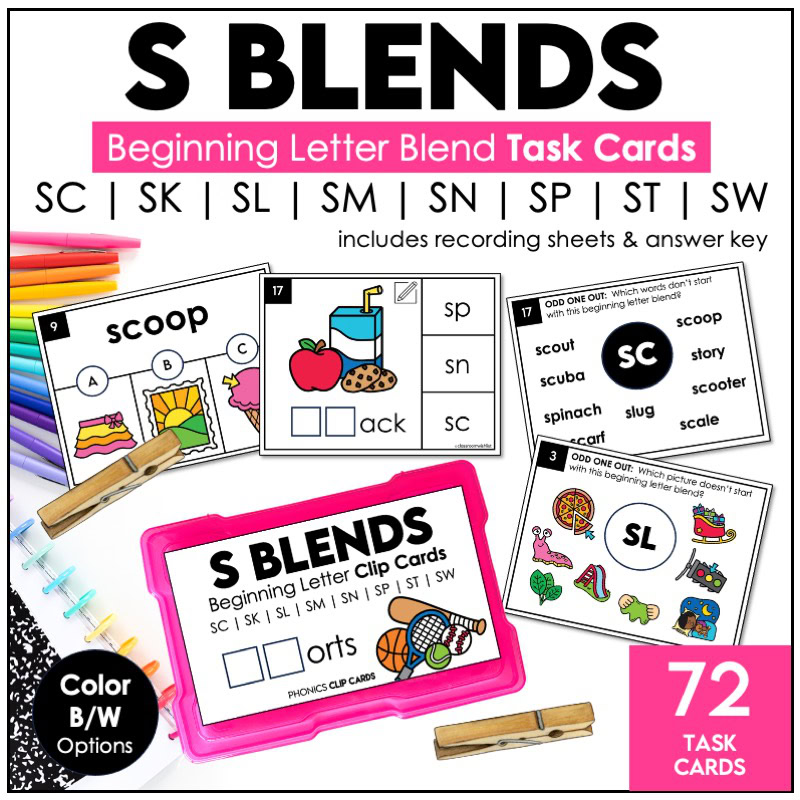
Clip cards are especially helpful for students who confuse similar-looking or similar-sounding blends. The format forces them to slow down, compare sounds, and make a clear choice.
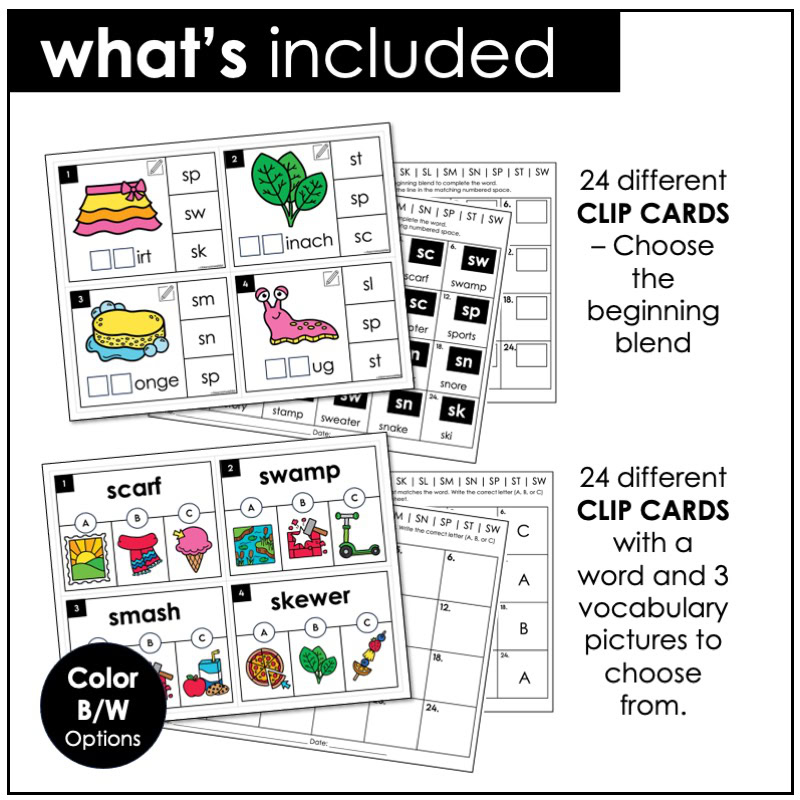
How to use them: Students read the picture-and-word prompt and clip the correct blend. In small group, ask students to explain their choice aloud.
Sample student response: “This is slide. It starts with sl.”
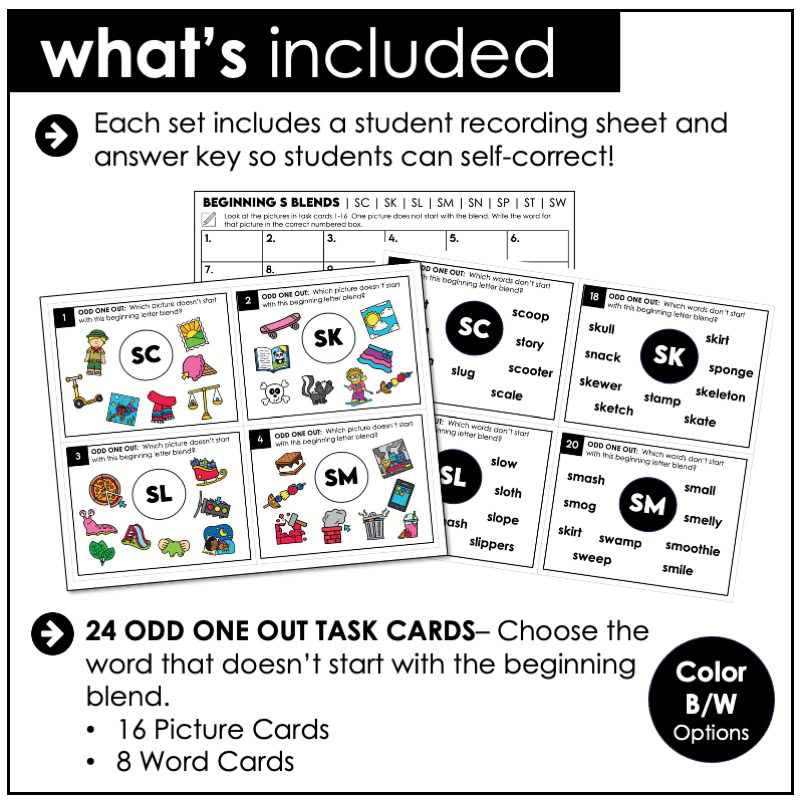
You can differentiate clip cards by asking students to:
- identify only the beginning blend
- read the full word aloud
- use the word in a sentence
- sort finished cards by blend
A 5-Day S-Blends Lesson Plan
Day 1: Introduce the Blends
- Review sc, sk, sl, sm, sn, sp, st, sw
- Model each blend sound
- Read sample words together
- Time: 10–15 minutes
Day 2: Practice with Clip Cards
- Students choose the correct beginning blend
- Teacher listens for common mistakes
- Time: 10 minutes
Day 3: Play S-Blends Bingo
- Start with picture-and-word boards
- Use word-only boards for students who are ready
- Time: 15–20 minutes
Day 4: Use the Card Game
- Students read each card before playing it
- Add a recording sheet if you want accountability
- Time: 15 minutes
Day 5: Review and Check Progress
- Mix clip cards and card game practice
- Do a quick oral reading check
- Ask students to read 5–8 S-blend words independently
- Time: 10–15 minutes
How to Differentiate S-Blends Practice
For Students Who Need Extra Support
- Use picture-and-word versions first
- Practice only 2–3 blends at a time
- Model the sound before students read
- Keep practice teacher-led or partner-supported
For Students Who Need a Challenge
- Use word-only boards and cards
- Ask students to sort words by blend
- Have students write sentences with the words
- Encourage faster blend recognition without over-sounding
How to Check Learning Without a Formal Test
You do not need a long assessment to see whether students are improving. These activities make quick checks easy.
- During bingo: have students read their winning row aloud
- During clip cards: ask students to explain their answer
- During the card game: listen for smooth blending
- Exit ticket: show 3–5 words and ask students to read them
Success looks like: A student can read a beginning S-blend word accurately, identify the blend, and do it with growing speed and confidence.
Why Teachers Like Print-Once Phonics Practice
Teachers need phonics materials that are easy to manage, easy to store, and easy to use again. Once these S-blends games are printed, they can become part of your regular literacy routine.
- low prep and reusable
- great for centers, small groups, and whole-class review
- picture support for developing readers
- word-only options for students who are ready
- more engaging than worksheet-only practice
- clear focus on one phonics skill
Teacher FAQs About Teaching S-Blends
What grade level are these S-blends games best for?
They are a strong fit for first grade, but they can also support kindergarten review, second-grade intervention, ESL learners, and students who need extra phonics practice.
Which S-blends are included?
The activities focus on sc, sk, sl, sm, sn, sp, st, and sw.
Why are pictures useful in phonics games?
Pictures give students a meaning clue and help them confirm the word after decoding.
Can I use these games in literacy centers?
Yes. The card game, bingo game, and task cards all work well in centers. Clip cards are especially easy for independent practice.
How long should S-blends practice take each day?
Short practice is best. About 10 to 15 minutes a day is usually enough when the practice is consistent.
What if my students mix up similar blends?
Limit the number of blends at first and use clip cards or oral explanation to help students compare sounds carefully.
Are games better than worksheets?
Games are not the only tool you can use, but they often provide more oral practice, more repetition, and stronger engagement than worksheets alone.
Can I use these for intervention?
Yes. These activities work well for intervention because they focus on one clear phonics skill and allow for immediate feedback.
How should I store the games?
Use labeled boxes, envelopes, or bags. Laminating can help if you plan to reuse them often.
What is the difference between the three resources?
Bingo is best for recognition and group review. Clip cards are best for focused accuracy. Card games are best for repeated reading and fluency.
Where to Find These S-Blends Phonics Games
- S-Blends Card Game on Hot Chocolate Teachables
- S-Blends Card Game on Teachers Pay Teachers
- S-Blends Bingo Game on Hot Chocolate Teachables
- S-Blends Bingo Game on Teachers Pay Teachers
- S-Blends Task Cards on Hot Chocolate Teachables
- S-Blends Beginning Sounds Task Cards on Teachers Pay Teachers
Final Thoughts
If your students are still building automaticity with sc, sk, sl, sm, sn, sp, st, and sw, a game-based phonics routine can make practice smoother and more effective. Use clip cards for accuracy, bingo for recognition, and card games for fluency.
That combination gives students repeated practice, visual support, and a clear path toward stronger decoding—without making phonics feel boring or overwhelming.


