

How to Create a Classroom Reward System Students Actually Understand

How to Create a Classroom Reward System Students Will Actually Use
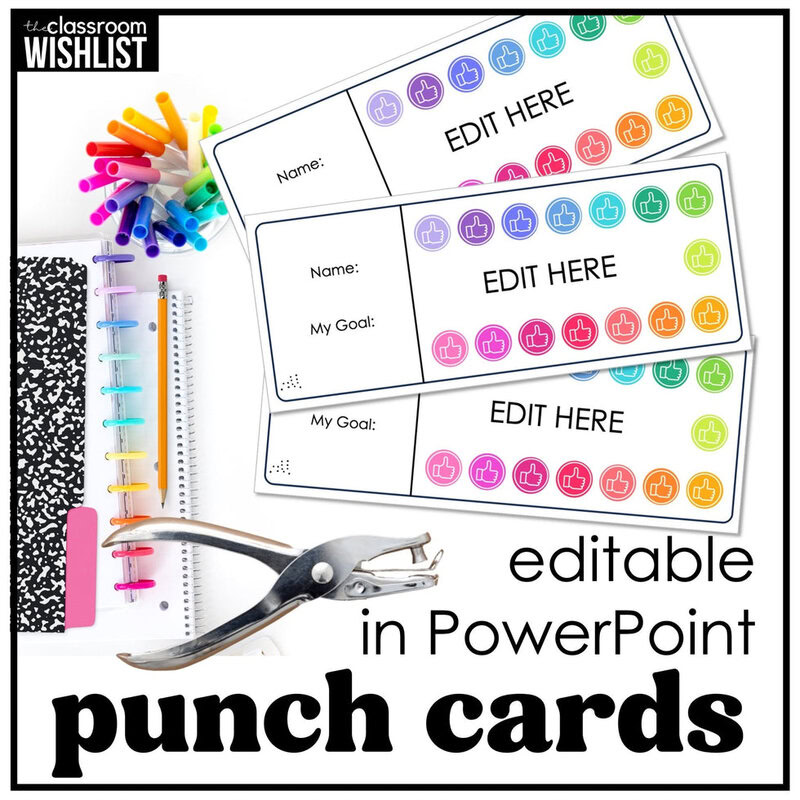
If you want a classroom reward system that is easy to manage and motivating for students, reward punch cards are one of the simplest tools you can use. Students can see their progress immediately, teachers can reinforce positive behavior quickly, and the system stays manageable even during the busy back-to-school season.
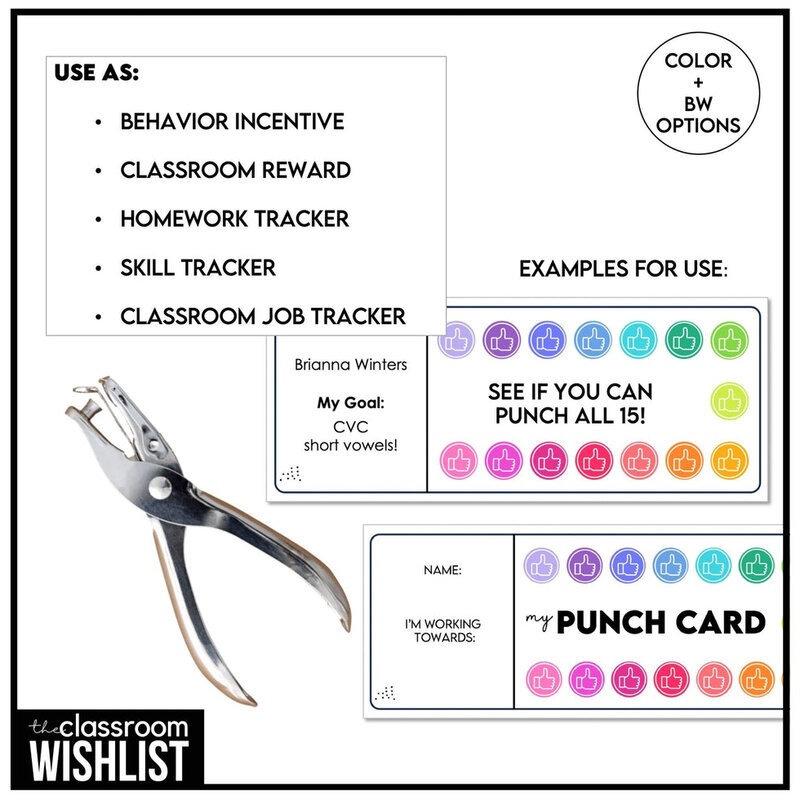
Whether you use them as behavior punch cards, classroom incentive cards, or student goal tracking tools, punch cards make it easier to build routines, encourage responsibility, and keep classroom expectations consistent.
Quick link: Grab the editable template here: Editable Reward Punch Cards (Hot Chocolate Teachables) or Editable Reward Punch Cards (TPT).
Why Simple Classroom Reward Systems Work Best
The most effective classroom rewards are usually the easiest ones to maintain. If a system requires too many steps, too much tracking, or constant prize shopping, it quickly becomes difficult to use consistently.
Reward punch cards work because they are quick, visual, and easy for students to understand. Instead of focusing on punishments or complicated behavior charts, students focus on building progress one punch at a time.
- Students can clearly see their progress.
- Teachers can reinforce positive behavior immediately.
- The system works for routines, goals, and academic habits.
- Punch cards are easy to customize for different students.
- They are low-prep and reusable all year.
That is why so many teachers use editable classroom reward cards during July, August, and September when routines are still being built.
What Are Reward Punch Cards?
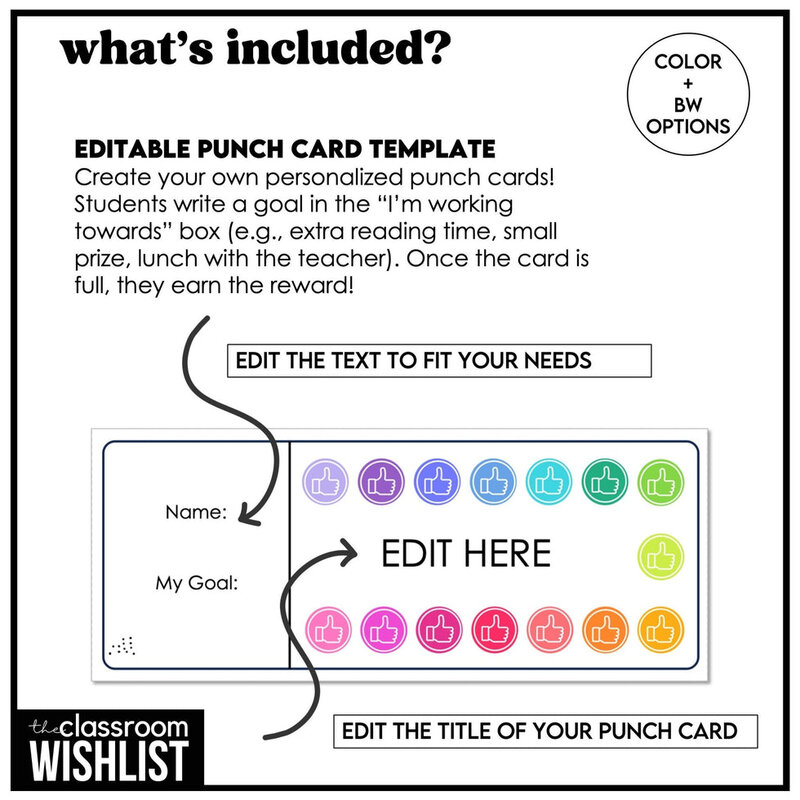
Reward punch cards are small cards students earn punches, stamps, or marks on whenever they meet a classroom goal. Once the card is completed, students earn a reward or classroom incentive.
Teachers use them for:
- positive behavior reinforcement
- classroom routines
- goal tracking
- homework completion
- reading goals
- participation
- social-emotional goals
How to Use Punch Cards for Positive Behavior
To make behavior punch cards effective, connect every punch to a specific behavior. Instead of giving vague praise, name exactly what the student did correctly.
Examples of teacher language
- “You started your work right away. Great job being responsible.”
- “You transitioned quietly and safely. That earns a punch.”
- “You used respectful words with your partner.”
- “You stayed focused during independent work.”
The clearer the behavior is, the more students understand what success looks like.
Back-to-school tip
At the beginning of the school year, focus on just a few classroom routines at a time. For example:
- starting work quickly
- quiet transitions
- following directions
- kind classroom language
This keeps your classroom reward system for elementary students simple and easier to maintain consistently.
Classroom Goals You Can Track with Punch Cards
One reason teachers love student goal tracking with punch cards is that the same system can work for behavior, academic habits, and personal growth.
Behavior goals
- following directions the first time
- staying on task
- using respectful language
- walking quietly in the hallway
- keeping hands and feet to self
Academic goals
- reading independently
- completing homework
- participating in class discussion
- checking work carefully
- using a writing checklist
Personal goals
- asking for help politely
- using coping strategies
- trying difficult tasks
- showing perseverance
That flexibility makes editable punch cards useful throughout the entire school year.
Reward Ideas Students Can Work Toward
You do not need expensive prizes to make classroom incentives motivating. In fact, many students respond best to simple privileges and classroom recognition.
- choose your seat for one lesson
- line leader
- extra drawing time
- pick the read-aloud book
- homework pass
- sit with a friend
- teacher helper job
- brain break choice
- music during independent work
- sticker or stamp
These types of positive behavior reward ideas for teachers keep the system affordable and sustainable.
How to Keep Punch Cards Easy to Manage
The best reward system is the one you can actually keep using on busy days. Here are a few ways to make classroom incentive punch cards easy to manage.
Choose one storage system
- Teacher stored: keep cards in a small box or folder.
- Student stored: students keep cards in folders or pencil pouches.
Create a punch routine
- after transitions
- during morning work
- at the end of the day
- after independent work
- during goal check-ins
The simpler the routine feels, the more likely you are to use it consistently.
What’s Included in This Editable Reward Punch Card Template
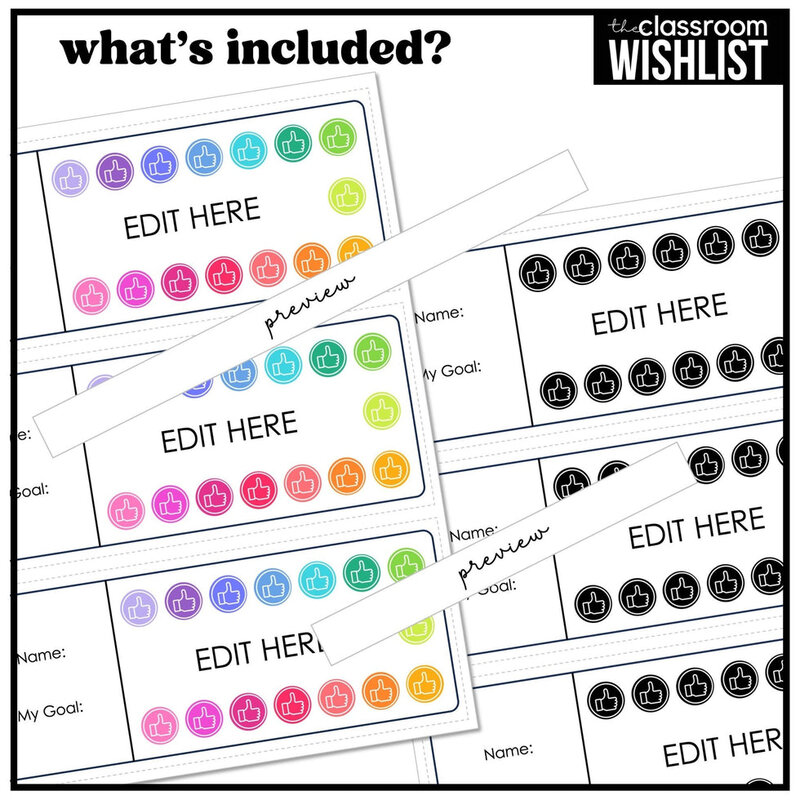
This resource was designed as a low prep classroom reward system that teachers can customize and reuse all year long.
- editable reward punch card templates
- behavior tracking card options
- goal tracking templates
- classroom incentive cards
- easy-to-print designs
- flexible classroom uses
Get it here: Editable Reward Punch Cards (Hot Chocolate Teachables) or Editable Reward Punch Cards (TPT).
A Simple Back-to-School Punch Card Plan
Week 1: Build routines
- Focus on 2–3 expectations.
- Give punches frequently.
- Celebrate small successes.
Week 2: Add one behavior goal
- Add a goal like kindness or responsibility.
- Continue naming behaviors clearly.
- Shift toward daily check-ins if needed.
Week 3: Increase student ownership
- Have students reflect on goals.
- Introduce a simple reward menu.
- Keep routines predictable and consistent.
What success looks like: Students understand expectations, track their progress, and stay motivated without constant reminders. Teachers spend less time managing behavior and more time teaching.
Quick Shop Links
- Editable Reward Punch Cards for Students (Hot Chocolate Teachables)
- Reward Incentive Punch Cards Editable Template (Teachers Pay Teachers)


